Yesterday I decided that I was going to go out on my own. I was going to try baking without a net. Or without a recipe. I know what needs to go into bread. I know some ratios that work. I know basic procedures. I wanted to see if I could take the knowledge that I’ve gleaned and try to create something new. New to me at least.
I decided that I was going to try a 70% hydration loaf. That is 10:7 ratio of flour to water. Since my starter is 100% hydration (equal parts flour and water) it wouldn’t be too hard to do the math. All told I’d need 700 grams (or cc or ml) of water for every kilogram of flour. Since 500g flour makes a reasonable sized loaf I’d start with that so as to minimize waste if it didn’t turn out well.
So… 500g flour means 350g water. I figured 12g salt would finish it out.
I started with 200g of my starter about 6 hours after its daily feeding and added 100g each of flour and water. (If you’re having trouble keeping track this is 200g of water and 200g of flour.) I let this rest for about an hour to become a levain.
I came back to my levain and I added the rest of the flour (300g) and water (150g), and let that sit for an hour to autolyse. After an hour I came back and folded the dough on top of itself. I repeated that 3 more times over the next 2 hours. Another hour to rest and I came back to the dough and I was pretty happy with how it looked. I took it out, folded it to gently deflate it and shaped it into a ball before plopping it in a proofing basket. The dough then went into the fridge to get a good night’s sleep.
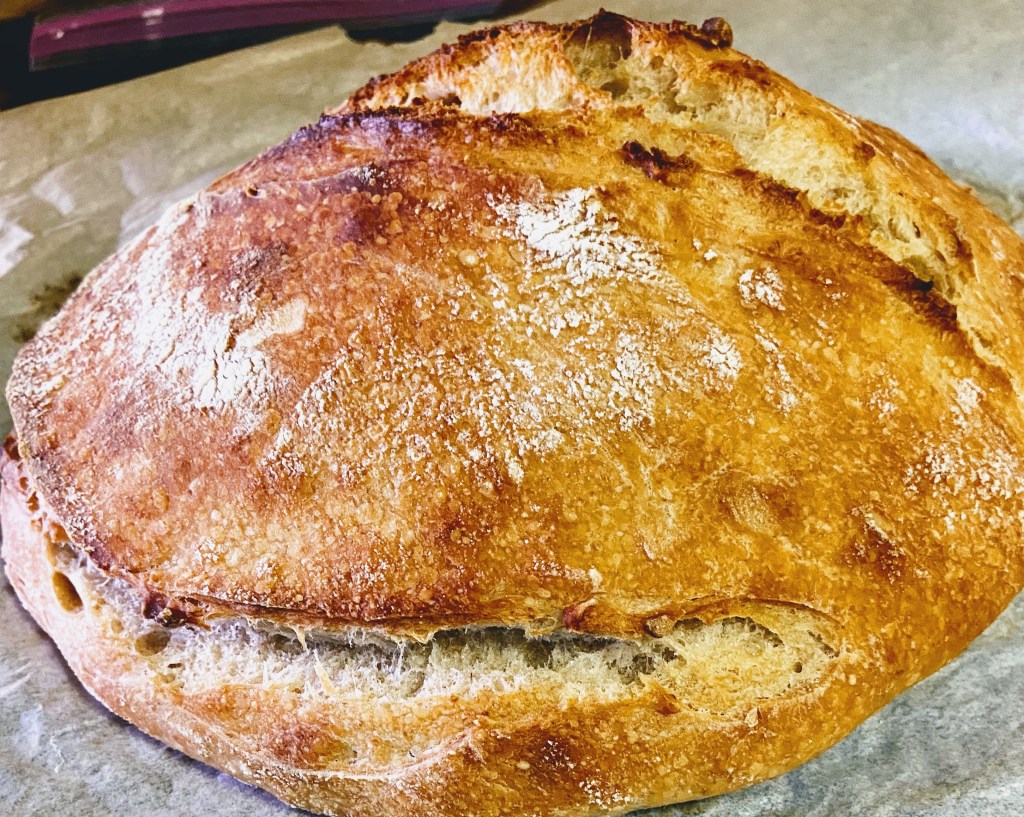
Being the lazy person that I am I had my son take out the dough about an hour before I planned on coming downstairs and turn the oven to 450°F about 30 minutes later. (Knowing I couldn’t trust either of us to remember I put a baking pan in the oven before I went to bed. When I came down in the morning the dough was ready to go in the oven and the oven was ready for the dough. I boiled some water, put the dough out on a baking tray and scored it. Into the oven the dough went with the boiling water going into that very hot baking pan. 35 minutes later out came the bread.
Then came the hardest part of the whole exercise. I’m the kind of baker who wants to eat the bread when it’s hot out of the oven and the butter I slather onto it melts. But for this loaf I wanted to test this recipe. That meant I had to do it properly and wait for the bread to cool. So I waited as the bread sat on its cooling rack mocking me for about 2 hours.
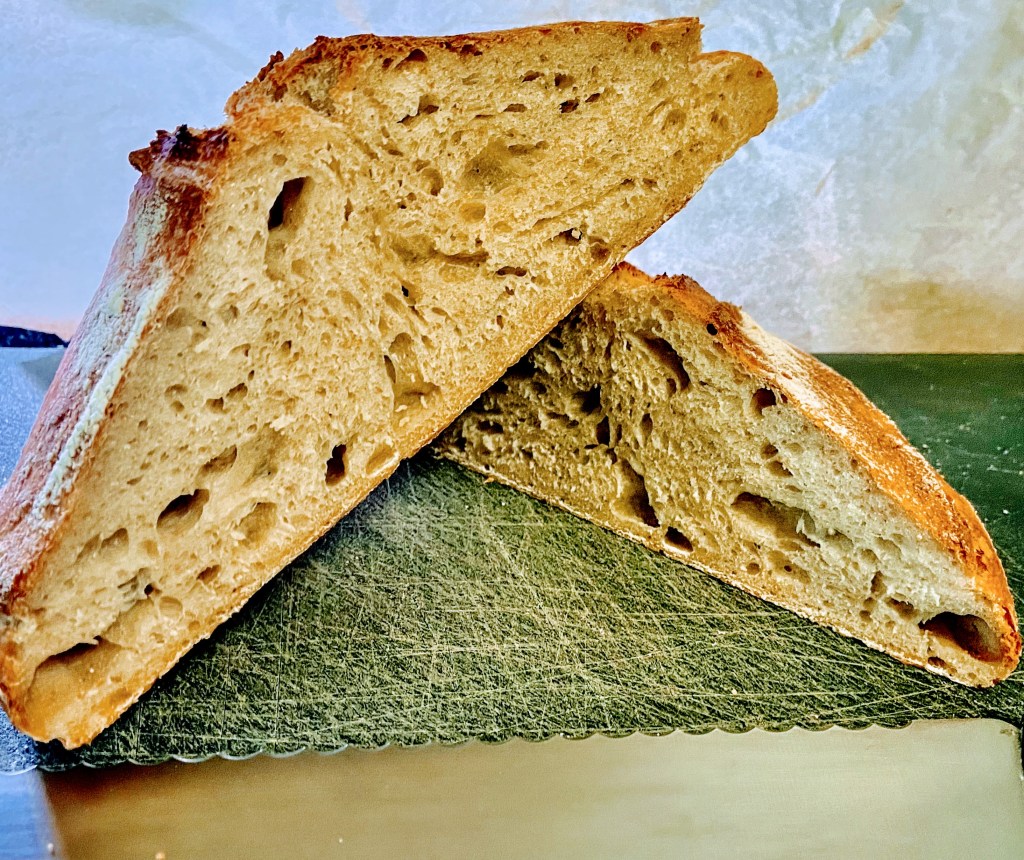
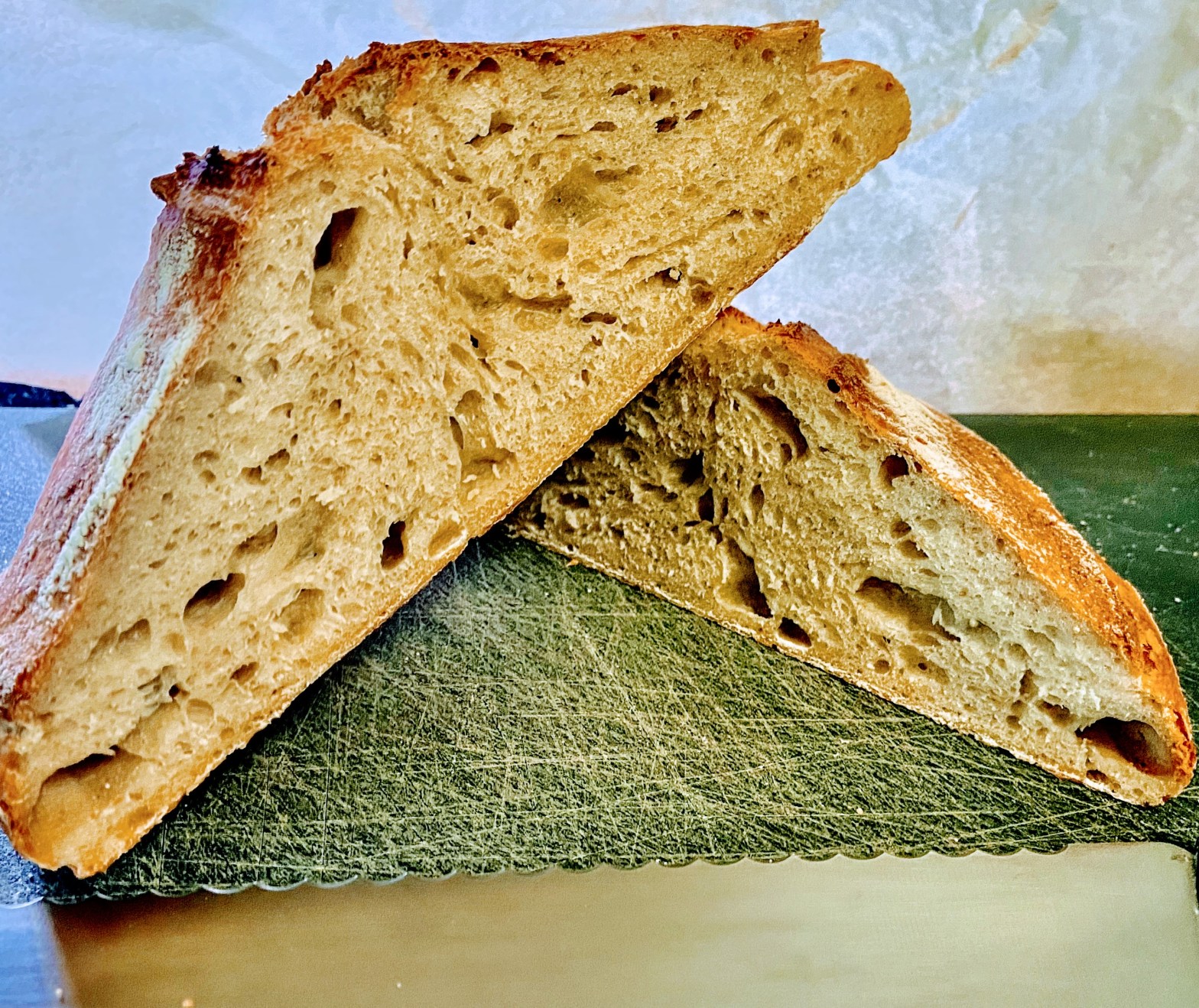
I sliced into the bread and saw an uneven crumb with some big holes and some smaller ones. Not quite what I was going for but visual proof that I was on the right track. I had that first piece of the bread (yes, slathered with butter even though it didn’t melt) and I was reasonably happy with the flavor. It didn’t have an overly sour tang to it (one of the complaints I’ve gotten from family members) but I could tell it was a sourdough. It had the wonderful crust that I’ve come to expect (the difference removing fat and adding steam makes is huge!) from my sourdoughs. The texture was a bit denser than I might like but, overall I was happy with the first attempt.
The only thing I didn’t really like (and I’ve seen this with most of the no-knead recipes I’ve done) is that rather than rising in the oven it spreads out. I think that might be why so many of them suggest cooking in a Dutch oven. The recipes that call for kneading seem to do a better job of building up the gluten and helping the dough keep its shape and rise up and not out while cooking.
I think the next step in this recipe is to take the same quantities and go the old fashioned, kneaded dough route. I think I’ll start that tomorrow. Maybe I’ll do a post with the prep stages and some pictures as I go and then share the final product on Monday. Tune in tomorrow to find out.
 My Baking Adventures
5 thoughts on “My first solo attempt”